måndag 20 maj 2013

Debate Article


In today’s Sweden it is estimated that one out of every five grocery bags brought home from the store is thrown away, according to research conducted by Lantmannen. Why? Because we lack food literacy. The modern shopping experience is confusing and often leads us to bring home a number of things we didn’t expect to purchase. Moreover, we don’t often know how to take care of the familiar things. My roommate habitually throws away milk at midnight if the carton has reached its best-before date. What kind of culture has produced people who believe that the numbers on a carton hold some magical power over the contents, can reveal the secrets of food’s quality and freshness better than our own noses and taste buds can? We fetishize best-before dates while discounting our own experiences and the knowledge given by our senses.
The way that we waste food, the carefree way in which we throw away milk, allow vegetables to rot in our crisper drawers, cook more than we can eat and let the leftovers go to the dumpster, is a symptom of a wider problem, a disconnection from nature and our rootedness to the planet. David Suzuki writes in his book The Sacred Balance about the importance of soil, and the shrinking availability of arable soil (148). Soil is priceless, he writes. The food that grows on this soil should also be priceless, yet in a country like Sweden, it clearly is not.
Suzuki also talks about recognizing the interconnectedness and immense beauty of all species, and about how unfamiliar we have become with our local environments. This unfamiliarity also breeds the trends that lead to food waste. As well he talks about the changes that have happened in so short a span of time in the West, after the war (page). Seldom have we been so unaware of where our food comes from. It is grown far away, often in lands that were ravaged, with ancient forests cut down to provide more land to raise cattle and soybeans. We eat exotic fruits almost without a second thought. Oranges were once a special treat reserved for celebrations in the shortest days of the year, and tomatoes and strawberries a delicacy worth waiting the whole year for. Now we ship them from far away, buy them and throw them away. Increased food literacy would mean understanding the environmental costs behind food, and respecting the food’s life, its natural source in the environment, as Suzuki urges us to do throughout The Sacred Balance.
How are we, as a community, to minimize food waste? Here are a few simple proposals, some a greater challenge than others, all aimed towards long-term results. 1) The popularity of community gardens has skyrocketed in recent years, but as Suzuki notes, those who are introduced to nature at a young age are more likely to pursue this connection as adults (45). Therefore, I propose that not only should all towns in Sweden offer the possibility of community gardens to adults, but also vegetable gardening must be introduced as a mandatory part of the primary school curriculum, with plots set aside on the school grounds. Teach children early where their food comes from and show them that we are capable of raising it ourselves, what a miracle! We are nearing the end of the UN Decade of Education for Sustainable Development (2005-14) and this proposal is one way of meeting the goal of “having a different vision of the world.” The UN paper states that educational programs must be reoriented and have the goals of building public understanding and providing practical training. An elementary school gardening curriculum meets these goals perfectly. 2) Taxes should be introduced on foods shipped from abroad at great environmental cost, and on foods with intensive farming practices. It should become a clear choice for consumers to choose locally raised organic beef, rather than beef raised abroad or raised on intensively farmed soy that was grown in the rainforests. As Marta Cullberg-Weston argues, it takes regulation to make change, in some cases. 3) Finally, a systemic change in our relationship to food must come about. We must stop thinking about food as a commodity owned by big processors and chain stores and see it as an intimate part of our relationship with the earth, something to be nurtured and respected, not bought and sold to the highest bidder.

onsdag 3 april 2013

fawn/faun

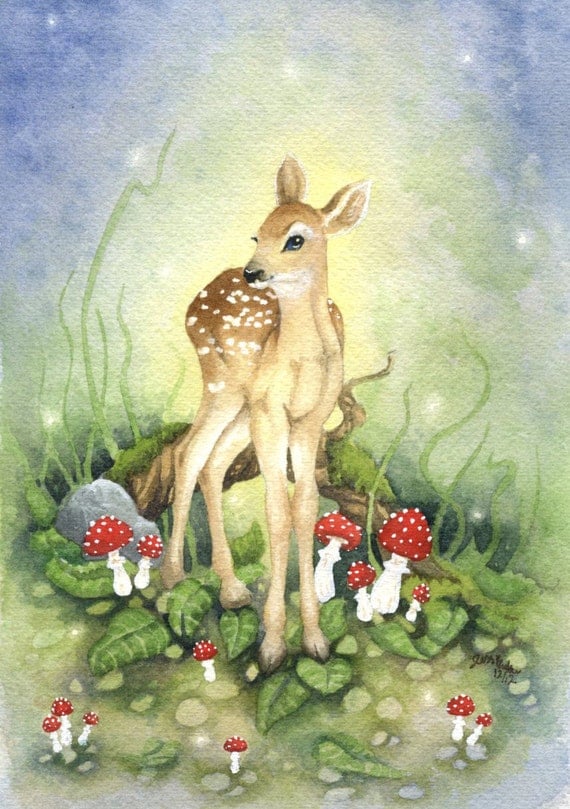
Late last spring I saw a baby fawn (faun?) frolicking with it's mother in the grass beside a country road, and since then have become more or less obsessed with faun things - despite never being completely sure how to spell it - which is the colour and which the baby deer? At any rate, here are my faun-favourites from etsy.

Little Fawn - Fine Art Watercolor Print - 5x7 - woodland. deer. whimsical. nature. animal. earthy. baby animal. cute. green. red.


As a matter of principal, I am suspicious of anything etsy described as 'whimsical'. But I would so love to have this little fawn on my wall. From Jessie Barber.

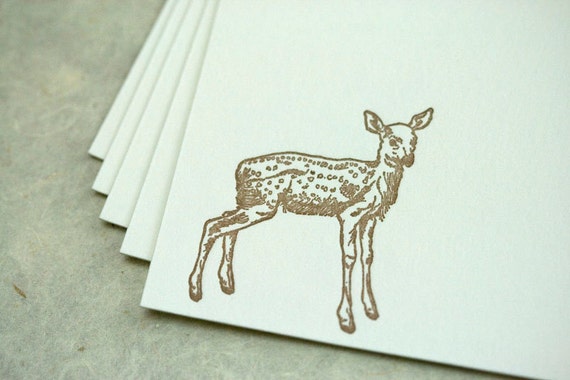
Letterpress note cards 10 pk - Fawn
Fawn notecards from papillon press. Imagine how lovely it would be to write notes on these!

Amigurumi Crochet Pattern - Fawn
I would love to crochet this little guy. Pepika.  

måndag 1 april 2013

Who I follow on flickr

I love flickr, although I haven't uploaded very much lately due to a string of camera problems. Instead, I've mostly just been looking. Here are some of the people I follow:

just take five +5
DESENHADORA
Cecilia Murgel is an artist, lives in Brasil and posts scans of her psychedelic, colour-saturated illustrations and journal entries full of cats, hammocks and beautifully meandering lines of text.


My Style : Mod Times
La vie c'est yeye: Izzy lives in Montreal, went to fashion school, and takes pictures of her supercool 60s-inspired outfits (and those of her partner, too) and their super-groovy 60s apartment. 


_cassia_  : dreamy still-lifes of books and telephones in perfectly muted pastels.Her photos are not shareable, but go look! They are so wonderful.

Untitled
Untitled
Yvette Inufio: lots of whites, beautiful light, and interesting details. Like _cassia_, her photos make me think of languid summer afternoons, old rooms and magic-realist stories.

söndag 31 mars 2013

the strongest girl in the world

I love going to the gym now. Not so much for the workout itself, but more because I'm amazed that I do it at all, and at what I can do when there. As a kid I hated gym class. I never learned to swim properly because at lessons I'd offer to let other kids go ahead of me in the line for the diving board, among other tricks for staying as dry as possible. The only time I can recall being yelled at by a teacher was when I let a kid in gym class take all my turns for me (it was some kind of ball-throwing practice) while I sat on the sidelines and played with dandelions. And any sport that involved a field was a disaster - during baseball and football games I'd gaze idly at the clouds instead of the game.

In short, I've never thought of myself as particularly physically active. The things I do at the gym now - running a few kilometers on the treadmill, or lifting weights, are not so remarkable, but every time I see that I've managed to lift ten or twenty kilograms with my own two arms, or that I've been running for over ten minutes without giving up, it seems incredible.

I've always thought of myself as a bookish sort, lost in daydreams or curled up in the library. I could never have imagined myself at the gym, of my own free will, lifting weights, running, cycling until my legs burn. It's so lovely to find out what you really can do, after all.

onsdag 27 mars 2013

vintage party


Once a week I broadcast a radio show on Uppsala student radio. (You can listen live at www.studentradion.com every wednesday at 8pm) I play music from the 40s-60s, music for dancing and for impromptu kitchen parties and for sunny afternoons. Tonight's show is about music from France. Here's the playlist:


Follow me on spotify for more, my username is dawnanthony.

bisous!

afternoon

I love being home alone in the afternoon. It's always so sunny (or else cozily rainy or snowy) and quiet, and you get to enjoy the satisfying feeling of being home when everyone else is working or in class.


The mug is from when I was staying in New York, just a block from Zabar's - the world's best grocery store - in a small old hotel without a dining room. I bought a mug for two dollars and a box of tea and walked to Zabar's every morning for bialys and fresh bagels and yoghurt and fruit, then had breakfast in my hotel room while watching strange American talk shows on television. It was wonderful.

tisdag 26 mars 2013

lunch a la francaise

I have a sort of hobby of collecting cookbooks from the library. I like to take them home to live with me for a few weeks and look through them for food inspiration.

Here are some I have right now.

The French one (Modern fransk husmanskost) is a bit of a tease, the recipes are all so full of courgettes and peppers and tomatoes and other sun-loving vegetables that don't taste very good so far north at this time of year. It makes me long for summer. Or Marseilles. But I found a couple that looked like something I could do today.

Crottins de chèvre gratinés (chevre toasts) and petis pois à la francaise.

Groceries look nicest all together in a heap. The air around me smelled like basil the whole way home from the store. Heavenly.


Toasts ready for the oven. 


The finished product. So unbelievably good! Best lunch ever!